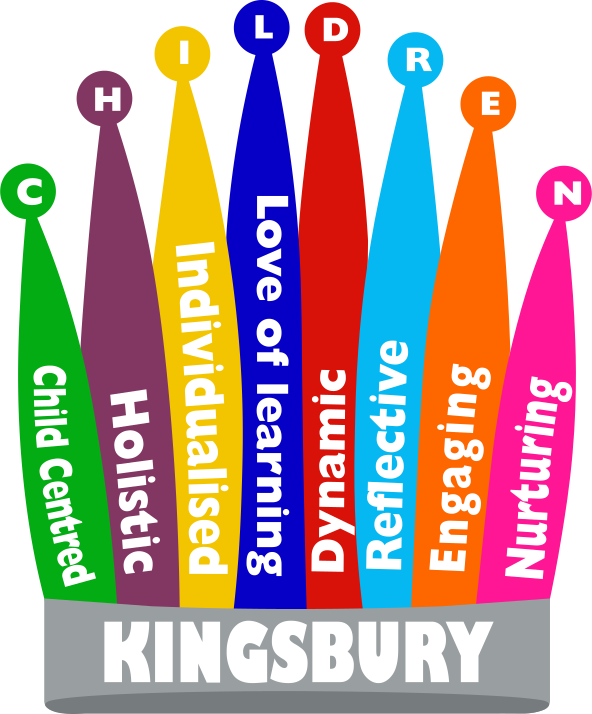
Kingsbury Primary Special School
Our Curriculum
Welcome to the Curriculum page of Kingsbury Primary Special School. As a maintained special school serving children aged 4 to 11 with a range of Special Educational Needs, we are committed to providing a nurturing and inclusive learning environment across our two sites—Scarisbrick Kingsbury Cottage for our Early Years Foundation Stage (EYFS) and our main site in Skelmersdale. Here, we place each pupil at the heart of our curriculum, ensuring their individual needs and potential are met with care and respect ensuring that every pupil leaves Kingsbury as the best possible version of themselves.
How We Teach
Our teaching approach is rooted in the values that define Kingsbury Primary Special School:
-
We CARE by creating a safe, family-like atmosphere where every pupil feels valued and supported.
-
We INSPIRE by encouraging pupils to try new things and embrace challenges at their own pace.
-
We NURTURE through personalised learning plans that respond to individual strengths and needs.
-
We RESPECT each child’s unique journey, listening carefully and adapting our methods accordingly.
-
We show CURIOSITY by fostering an environment where questions and exploration are welcomed and celebrated.
Our classrooms and learning spaces are carefully adapted to meet sensory and accessibility needs, ensuring all pupils can engage fully. Small group teaching, one-to-one support, and specialist interventions are used to maximise learning outcomes.
What We Teach
Our curriculum covers a broad range of areas tailored to each pathway, including:
-
Communication and Interaction
-
Personal, Social, Health and Emotional Development
-
Physical Development and Motor Skills
-
Literacy and Numeracy (adapted to individual readiness)
-
Creative Arts and Sensory Activities
-
Life Skills and Independence
-
Community Awareness and Social Skills
We integrate therapeutic approaches, technology, and outdoor learning opportunities to enrich pupil experiences and promote well-being.
Examples from our school:
- EYFS pupils at Scarisbrick engage in sensory play and communication activities that build early exploration skills.
- Pupils on the semi-formal pathway participate in group projects that develop teamwork and problem-solving, reflecting our respect and care values.
- Our Formal pathway learners recently took part in a community gardening project, demonstrating curiosity and nurturing their connection with the world around them.
To learn more about how our curriculum can support your child's unique needs or to arrange a visit, please contact our school office. We welcome prospective parents and carers to experience how Kingsbury Primary Special School lives its values every day.
Our curriculum pathways are thoughtfully crafted to support every pupil’s journey towards becoming the best, most independent version of themselves. Through our caring, inspiring, nurturing, respectful, and curious approach, we ensure that learning is a positive, inclusive, and enriching experience for all.
Together, we build a community where every child thrives.
Our Pathways
EYFS and Finders
Our EYFS and year 1 & 2 pupils that first join us are called “Finders” because this is when we find out about the child, and when they and their families find out about us. Our Finders class has children in it who may later be placed on any of our curriculum experiences.
How we learn
We are an active bunch of Reception and year 1 and 2 children who love to be physical and explore our environment with our senses. The Finder curriculum experience is more commonly known as a ’EYFS curriculum’ for children with generic learning difficulties. We follow a play-based curriculum with sensory stories as the driving force behind all of our learning opportunities.
Finders children learn through sensory experiences and play. Staff spend time observing each child to see what motivates and engages them so that future experiences can be planned which the children will find exciting! Depending on individual needs, important aspects of our day in Finders are -
Play
This is how our children learn. Many of our children need support to help them explore the possibilities of equipment so staff play with and alongside children to help them develop their skills. Play will be a mixture of child and adult initiated.
Sensory Lifestyles
Many of our children display sensory seeking behaviours therefore sensory lifestyle plans are out in place to develop regulation skills
Communication
All of our children have difficulties with communication. In conjunction with our Speech and Language Therapist different approaches are used which may include, objects of reference, use of photographs / symbols, PECS, AAC, intensive interaction, Makaton, developing joint attention skills etc. The whole school follows a Total Communication Approach.
Development of independence and self-help skills
Encouraging children to be as independent as they are able to is a central part of what we do. This may mean taking their coat or shoes off independently, washing hands, learning drink from a cup not a bottle, developing toileting skills and so on.
Pre-formal
This pathway is designed for pupils with profound and multiple learning difficulties (PMLD) who require highly individualised, sensory-rich learning experiences. The focus is on developing early communication skills, sensory awareness, and physical development through multi-sensory activities. Pupils engage with tactile, auditory, visual, and proprioceptive stimuli to build awareness and responsiveness. Learning is personalised to each child’s sensory preferences and developmental stage, incorporating specialist therapies such as sensory integration and physiotherapy. The curriculum promotes engagement through cause and effect activities, early turn-taking, and meaningful interactions with adults and peers, laying the foundation for future learning and social development.
Informal
Aimed at pupils with complex autism who benefit from experiential, play-based learning, this pathway focuses on developing foundational skills in communication, social interaction, and daily living. Pupils take part in practical activities that encourage exploration, problem solving, and early literacy and numeracy concepts in real-life contexts. For example, pupils might engage in cooking to develop sequencing skills and communication or explore the environment to enhance curiosity and attention. Social skills and emotional regulation are key components, with structured routines and personalised targets to build confidence and independence. The curriculum is flexible, allowing pupils to progress at their own pace while fostering curiosity, resilience, and positive self-esteem.
Semi-formal
This pathway supports pupils who are ready to engage with more structured learning while still requiring significant differentiation and practical approaches. Pupils develop skills across literacy, numeracy, and social understanding through personalised learning objectives that balance academic concepts with functional skills. The curriculum integrates thematic projects, group work, and problem-solving activities that encourage collaboration, communication, and self-expression. Pupils are supported to develop independence in daily tasks and community participation, with an emphasis on respect for self and others. Specialist interventions such as speech and language therapy are embedded, and technology is used to support learning and communication. This pathway prepares pupils for greater autonomy and the transition to more formal learning where appropriate.
Formal
Designed for pupils who can engage with a broad and balanced academic curriculum, this pathway offers structured learning across all National Curriculum subjects, adapted to individual ability. Pupils develop core skills in literacy, numeracy, science, and humanities alongside creative arts, physical education, and personal development. The curriculum aims to prepare pupils for future independence, further education, and lifelong learning by fostering critical thinking, problem solving, and self-management. Pupils participate in differentiated lessons that challenge and inspire them, supported by individual targets and regular assessments. Opportunities for community involvement, work-related learning, and enrichment activities are integral, helping pupils build confidence and practical skills. This pathway encourages pupils to become active, curious learners who take pride in their achievements and contribute meaningfully to their communities.